
Past Event
14:00 Kuala Lumpur 16:00 Sydney
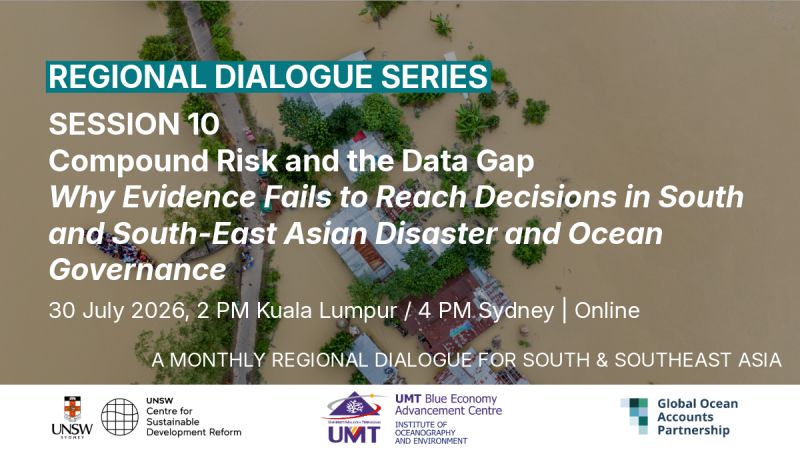
Regional Dialogue 10. Compound Risk and the Data Gap
Why Evidence Fails to Reach Decision Makers in South and South-East Asian Disaster and Ocean Governance.
View Details
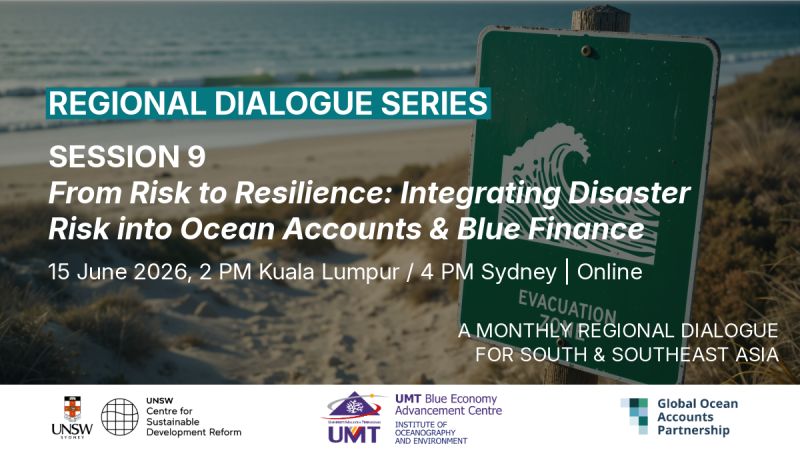
Explore what coastal and ocean hazard data exists, what it can reliably tell us, where the critical gaps are, and what it would take to translate research-grade oceanographic outputs into decision-ready indicators for policymakers, finance ministries and investors.
Flood, storm and coastal hazard data sit largely outside the ocean accounting systems and blue finance instruments that increasingly shape investment in the ocean economy. This dialogue explores how disaster risk metrics — exposure, vulnerability, and avoided losses — can be systematically embedded into ocean accounts, and then translated into the structuring of blue bonds, resilience bonds, parametric insurance, and budget-tagged investment pipelines.
This Dialogue is part of the monthly Regional Dialogue on Ocean Data, Finance & Governance for Sustainable Ocean Development hosted by the Centre for Sustainable Development Reform at the University of New South Wales and Universiti Malaysia Terengganu (UMT), Malaysia.
The pathway from disaster risk to ocean resilience begins with data — and much of that data lives in the ocean itself. Storm surge patterns, coastal erosion trends, monsoon-driven currents, and wave dynamics are the raw material from which any meaningful risk-informed ocean account or blue finance instrument must ultimately be built. Yet these datasets remain largely outside the accounting and financing systems that shape investment in the ocean economy. This session centres on that foundation: what coastal and ocean hazard data exists, what it can reliably tell us, where the critical gaps are, and what it would take to translate research-grade oceanographic outputs into decision-ready indicators for policymakers, finance ministries and investors. The conversation moves from the science of coastal hazard to the practical question of how that science enters — or fails to enter — the risk-to-resilience pathway.
Guest panellist:
Professor Ts. Dr. Mohd Fadzil Mohd Akhir
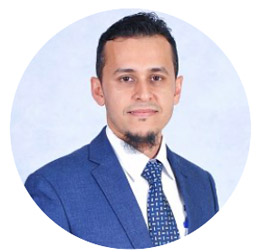
Pro Vice-Chancellor (Strategy, Performance and Corporate); Physical Oceanographer, Institute of Oceanography and Environment (INOS), Universiti Malaysia Terengganu
Professor Fadzil Akhir is a physical oceanographer whose research covers ocean circulation, coastal hydrodynamics, monsoon-driven currents, upwelling, and beach morphodynamics in the South China Sea and Malaysian waters. In this dialogue, he brings the perspective of the underlying ocean and coastal hazard data — what it can and cannot tell us — that any risk-informed ocean account or blue finance instrument ultimately depends on.
14:00 Kuala Lumpur 16:00 Sydney
Why Evidence Fails to Reach Decision Makers in South and South-East Asian Disaster and Ocean Governance.
View Details
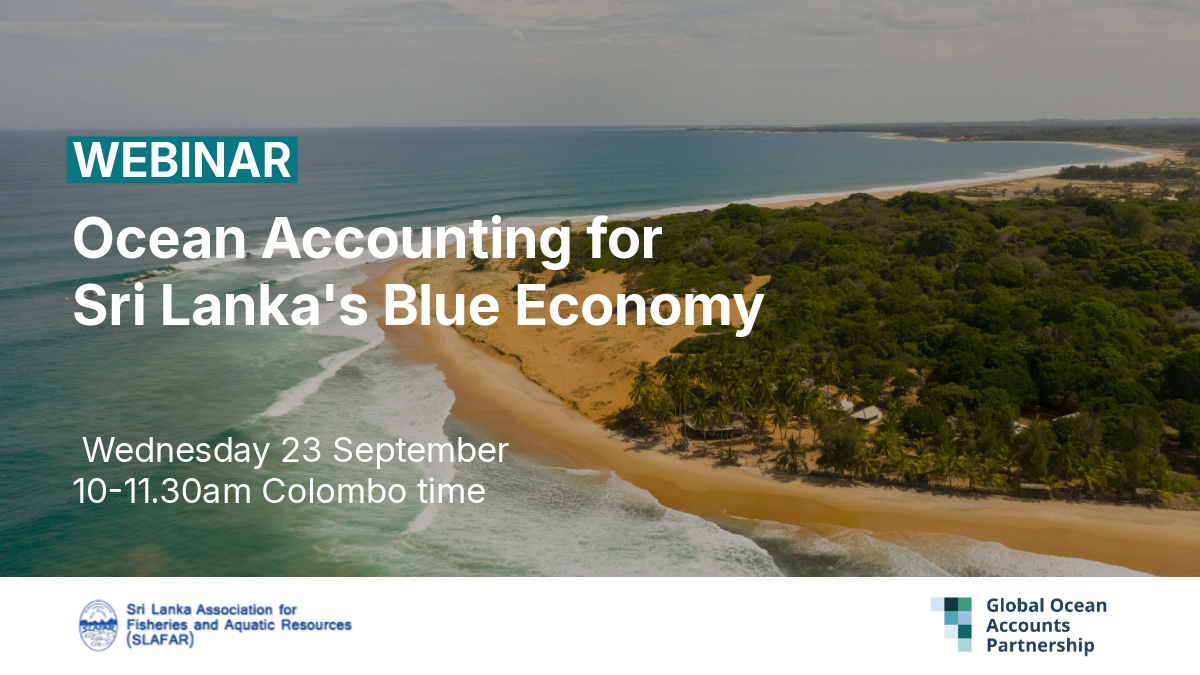
10:00 to 11.30 AM (Columbo time) | 14.30 (AEST) Colombo
Measuring to inform research, statistics and policy. The webinar aims to build shared understanding of how ocean accounting measures the blue economy and where it can support national decisions in Sri Lanka.
Learn More
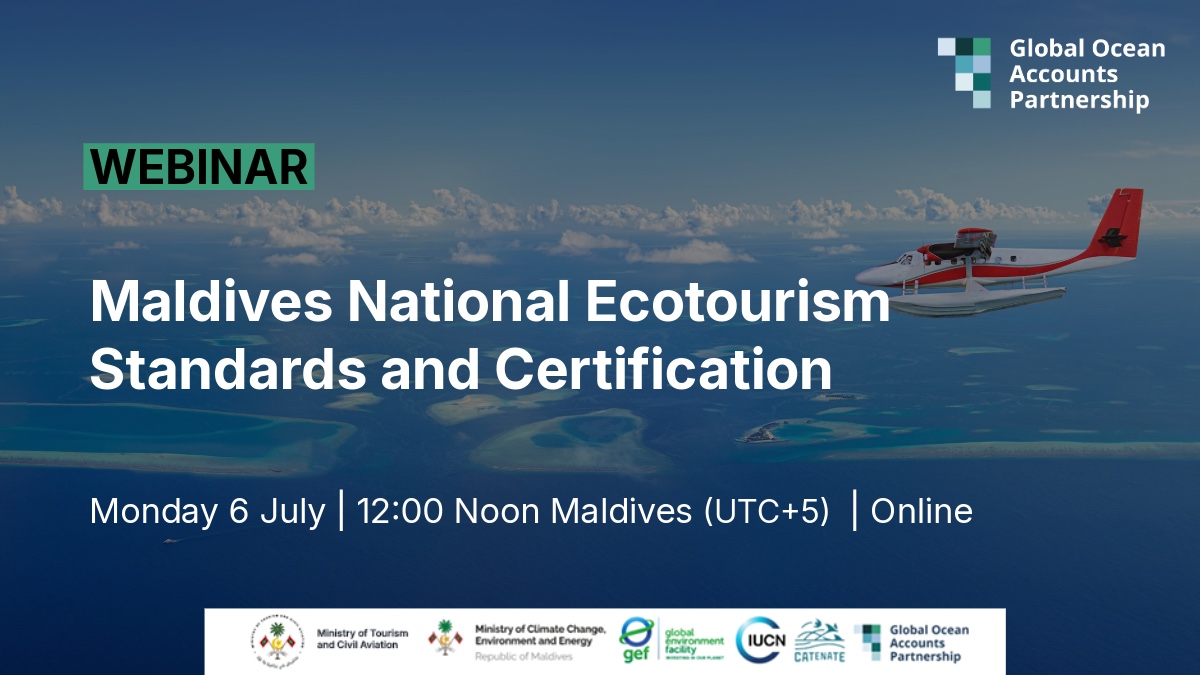
12:00PM Maldives | 5:00 PM (AEST)
An introductory webinar on the draft of the Maldives' National Ecotourism Standards and Certification Framework. A GEF-funded CATENATE project, on behalf of the Ministry of Tourism & Civil Aviation and the Ministry of Climate Change, Environment & Energy.
View Details