Social Accounts Working Group Breakfast
Our Ocean Conference 2026, Mombasa
Hosted by the Global Ocean Accounts Partnership (GOAP)
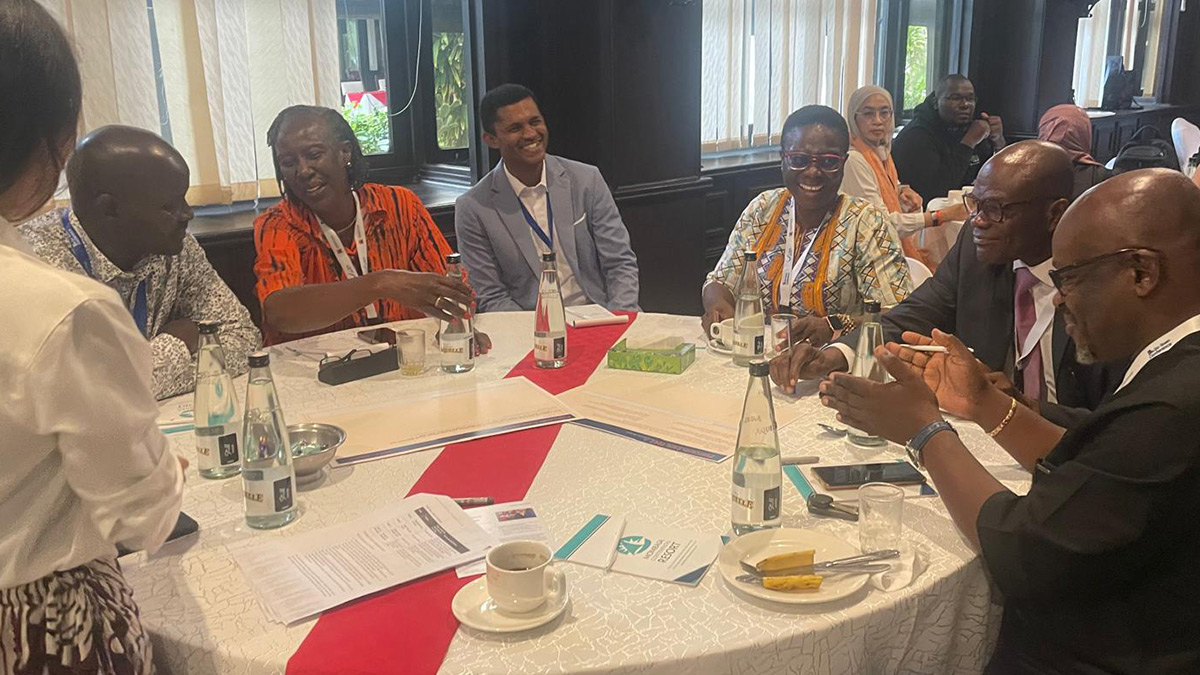
The Social Accounts Working Group gathered over breakfast at OOC11 in Mombasa to mark two years since its founding at the 5th Global Dialogue on Ocean Accounting in Bali (July 2024), take stock of progress, and shape priorities for the next 18 months.
The session was light in format and serious in intent.
It provided a chance to strengthen the network in person after two years online and welcome new and existing members from the Africa region and broader.
Opening
Jessica Bridgland (GOAP, UNSW) opened with a brief framing on the broader Ocean Accounts agenda and where Social Accounts sits within it.
Monica Navarro, Costa Rica’s Minister of Environment and Energy, then offered remarks reflecting on Costa Rica’s leadership in ocean accounting and its contribution to the Social Accounts pilot.
Rachel Thoms (WRI) welcomed the group with a reflection on how far the field has come since Bali.
Taking stock
Two years on, the Working Group has grown past 200 members and built real infrastructure: a replicable methodology for auditing national social data against the Ocean Accounts framework, tested across eight countries; 880 social indicators identified within existing national statistical systems; and four country pilots nearing completion in Belize, Costa Rica, the Maldives and Mozambique. Over 120 members are now authoring four Technical Guidance circulars due to launch in September 2026.
Postcards from 2027
The centerpiece exercise had each table write a postcard from December 2027 — describing, in the past tense, one concrete good thing the Working Group made happen over the 18 months (by late 2027), plus the first step needed in the next three months to make it real.
Each table owned a different theme, facilitated by Mariam Swaleh, Andrew Sullivan and Eveline Kurniati.
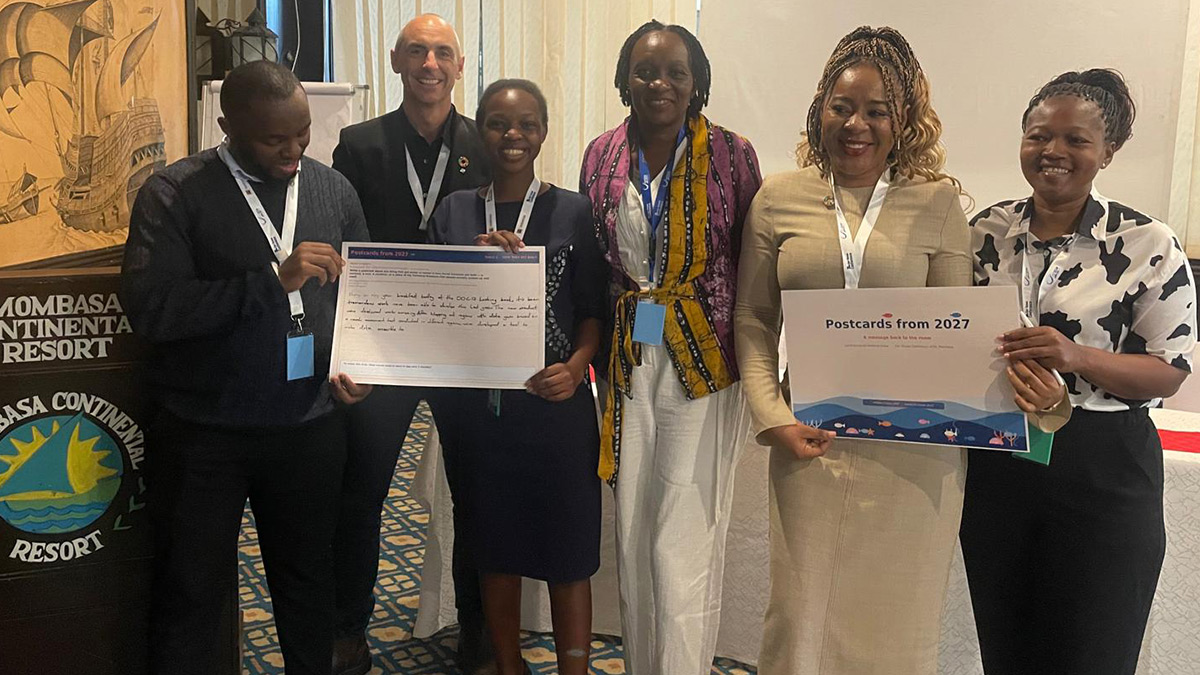
Themes from the Postcards
A few consistent threads emerged about where the Working Group wants Social Accounts to go.
Widening who is at the table. A clear pull toward bringing in voices and actors that haven’t shaped Social Accounts before — entrepreneurs and investors, funders and government on one side, and women, local communities and Indigenous peoples on the other. The emphasis was both on expanding the stakeholder base outward and on elevating under-represented voices into governance and decision-making.
Making the work usable and transferable. A strong appetite for practical tools that lower the barrier to adoption — a shared, open-source, AI-enabled tool that harmonizes data and knowledge, maps where the gaps are, and customizes information for different users, supporting reproducibility and replicability so the method travels beyond the existing group.
Data governance and consent. Recurring attention to how data is gathered and shared — hearing directly from communities about what incentives would encourage them to share their data, and grounding the work in community and Indigenous data governance rather than extracting from the top down.
Real-world impact and recognition. Aspirations that Social Accounts demonstrably change things — influencing business decisions and policy, supporting livelihood diversification, improving family savings and livelihoods, and securing recognition for the ocean economy at national level.
Communication and outreach. Tailored communication toolkits to reach different stakeholder groups, alongside advocacy and awareness, as the means of converting the work into demand from outside.
Planning with named milestones and actors. A consistent instinct to move from intention to delivery — road maps, stakeholder mapping, and first steps that name milestones and the people responsible, so the postcards translate into action rather than aspiration.
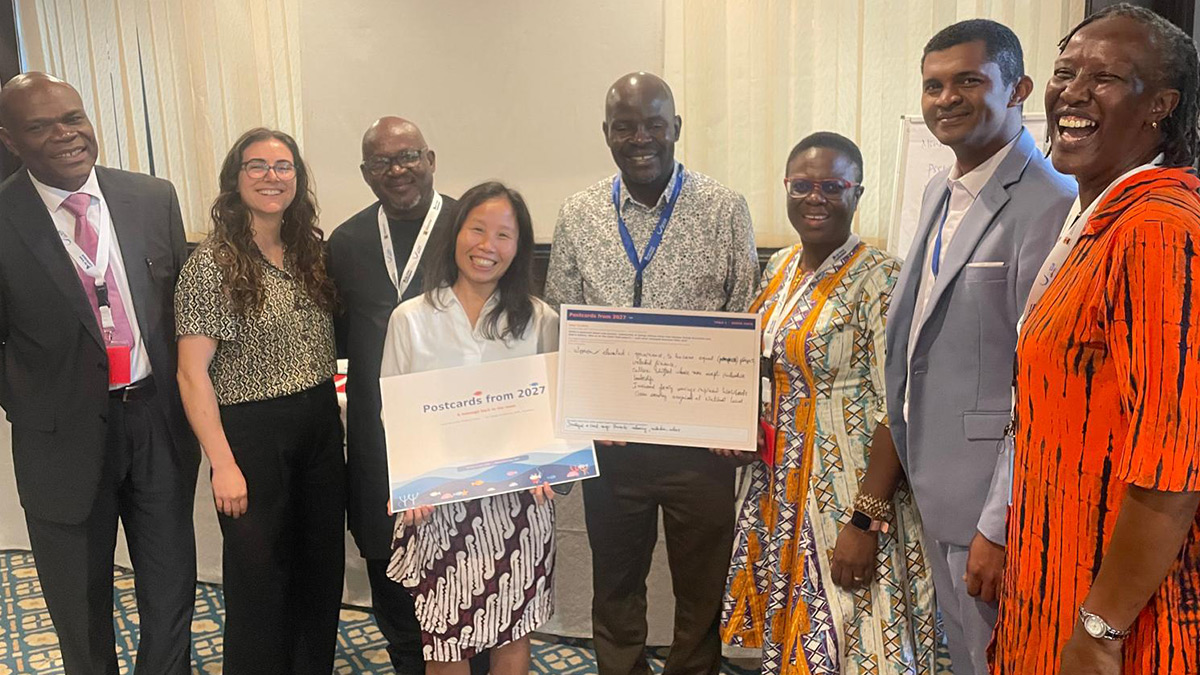
The three postcards and their first steps return to the Organising Committee and GOAP Secretariat for follow-up.