Workshop on Ecosystem Assessment: Towards a Sustainable Blue Economy. To move ecosystem assessment from theory into Viet Nam's everyday practice of planning, financing and policymaking.
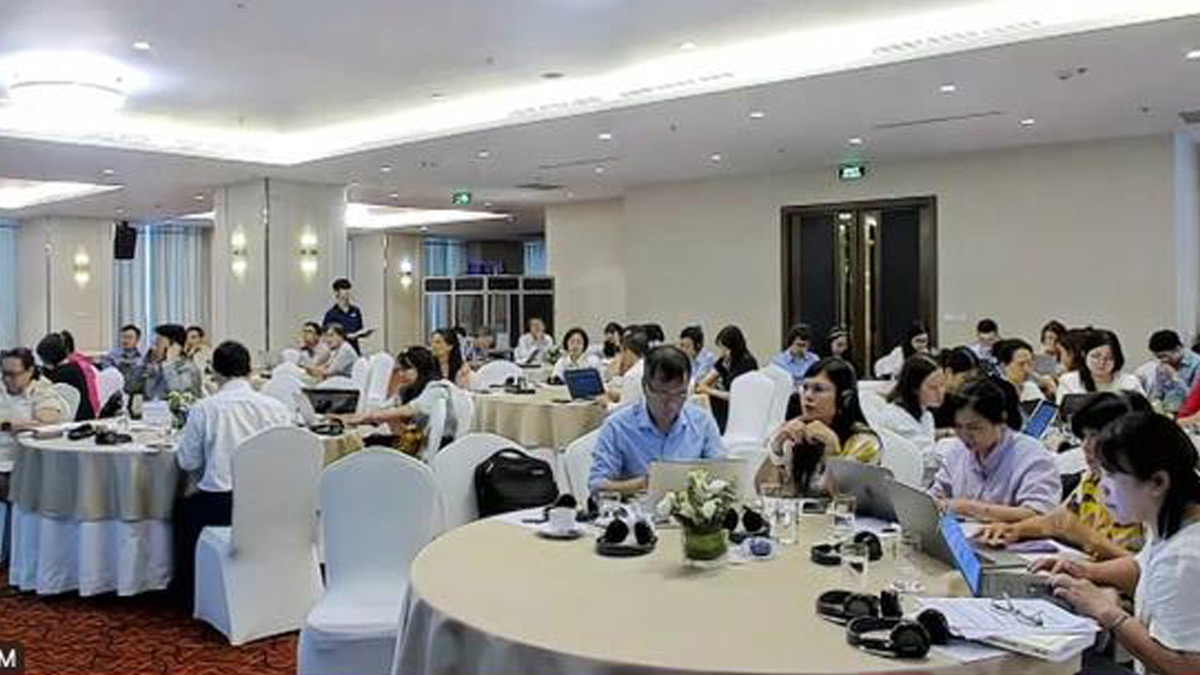
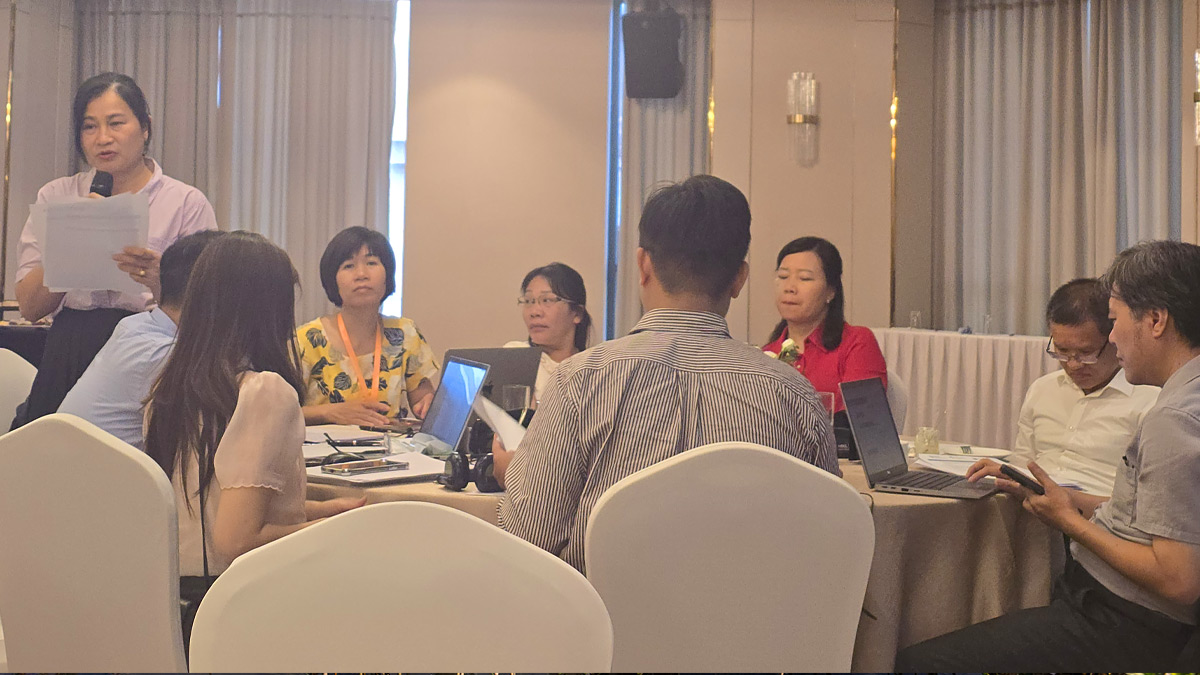
How do you plan for an ocean economy when the value of the ecosystems that underpin it — mangroves, seagrasses, coral reefs, coastal wetlands — rarely appears on a national balance sheet? That challenge brought together government officials, researchers, universities and development partners in Ha Noi for the Workshop on Ecosystem Assessment: Towards a Sustainable Blue Economy.
Jointly organised by the Hanns Seidel Foundation (HSF), the Institute of Strategy and Policy on Agriculture and Environment (ISPAE) and the Global Ocean Accounts Partnership (GOAP), the workshop set out to move ecosystem assessment from theory into Viet Nam’s everyday practice of planning, financing and policymaking.
From global methods to Vietnamese application
The programme traced a deliberate arc — from international frameworks to national application.
Opening the day, Prof. Assoc. Dr. Nguyen Dinh Tho, Deputy Director General of ISPAE, set the tone alongside representatives of the Hanns Seidel Foundation. Dr. Nguyen Mau Dung of the Vietnam National University of Agriculture then walked participants through the methodologies underpinning ecosystem assessment — SEEA-CF, SEEA-EA and Ocean Accounting — and how they translate into policy planning.
Blue carbon took centre stage as Dr. Tai Loureiro (The University of Western Australia) outlined assessment methodologies for sustainable ocean development, followed by GOAP’s Dr. Ben Milligan and Dr. Mitchell Lyons, who introduced open-source data infrastructure and demonstrated a live blue carbon reporting prototype and dashboards tailored to Viet Nam.
The afternoon turned firmly to the national context. Dr. Kim Thi Thuy Ngoc (ISPAE) reviewed the achievements and challenges of natural capital accounting initiatives in Viet Nam, drawing on international efforts such as WAVES and TEEB alongside national work with the World Bank, UNEP and GOAP. Dr. Cheryl Joy Fernandez-Abila (GOAP) presented global studies on the valuation of ecosystem services for mangrove ecosystems, and Dr. Tran Thi Thu Ha examined ecosystem services valuation and policy application in Viet Nam, including Payments for Ecosystem Services (PES). A hands-on group exercise closed the technical sessions before the workshop closes.
Part of a larger national investment
The workshop is one milestone within the GEF-funded project “Mainstreaming Marine and Coastal Natural Capital Assessment and Accounting into Viet Nam’s Development Planning for Blue Economic Growth of Key Sectors.” Led by ISPAE under the Ministry, with the UN Environment Programme (UNEP) as the implementing GEF agency, the project is building Viet Nam’s national natural capital accounting system, with pilot work focused on Quang Ninh Province.
The workshop carries forward the Ha Long Consensus on Ocean Accounting for Sustainable Development in South and Southeast Asia (2025), which set out shared priorities: stronger regional collaboration, sustainable finance for the blue economy, and better data infrastructure. By gathering Vietnamese ministries, provincial departments, universities and international experts in one room, the Ha Noi workshop turned those commitments into concrete next steps — and reaffirmed that valuing nature is not an academic exercise, but a foundation for Viet Nam’s blue economic future.
The Workshop on Ecosystem Assessment: Towards a Sustainable Blue Economy was jointly organised by the Hanns Seidel Foundation, ISPAE and the Global Ocean Accounts Partnership.